


Choir Director
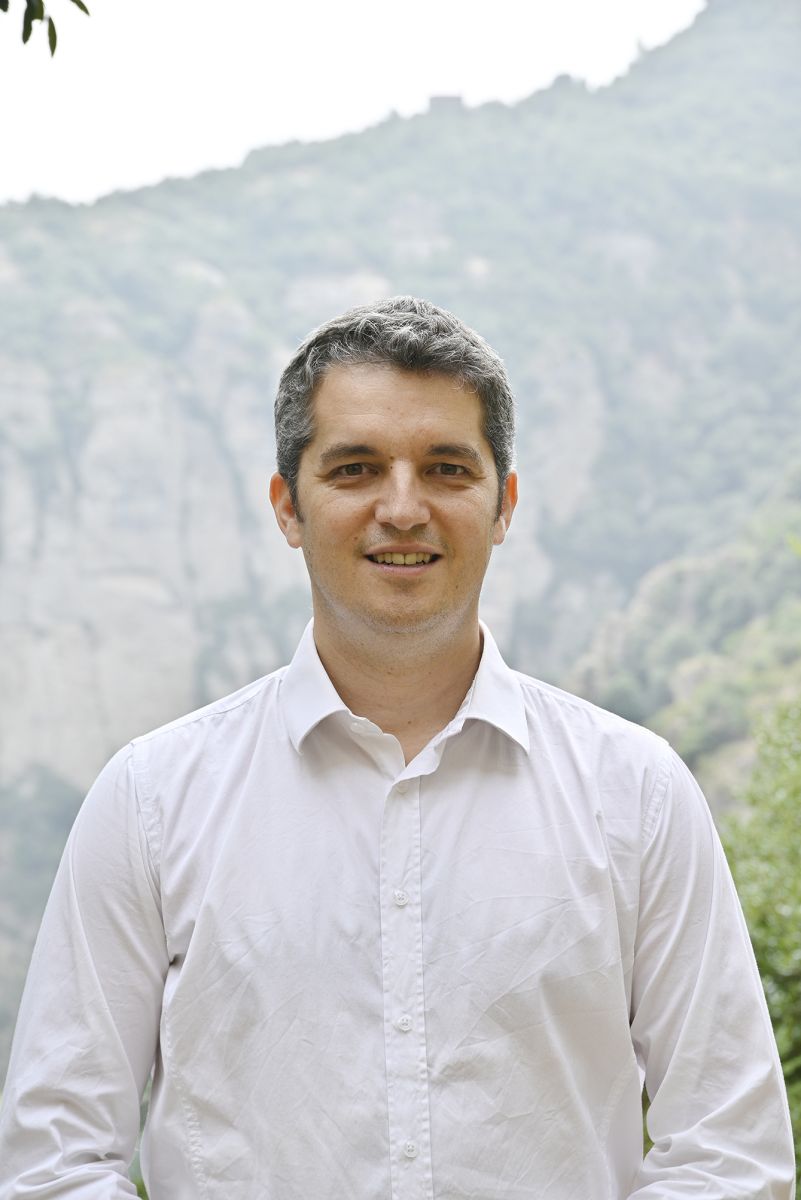
Pau Jorquera was born in Barcelona in 1982 and began his music studies in his home city. He studied Choir Conducting at the Escola Superior de Música de Catalunya. His studies also included singing, piano, and composition. At this school, he worked with Johan Duijck, Josep Vila Casañas and Mireia Barrera. His musical education was greatly impacted by professors Ramon Porter and Johan Duijck.
He earned a Teaching degree with specialty in Music Education from the Autonomous University of Barcelona. He studied professional percussion with Ignasi Vila.
In recent years, he has worked with the Grup Farmacèutic Salvat Foundation. As head of the musical projects area, he promotes the international scholarship for young singers SALVAT BECA BACH, as well as several concerts and music festivals.
He is a specialist in the interpretation of sacred music and early music. He is the founder and director of the Bach Collegium Barcelona and co-founder of the Bachcelona Festival.
In 2023, he has added the direction of the Schola Cantorum of the Escolania de Montserrat with his co-direction of the traditional Choir of the Escolania de Montserrat (2014-Present). Additionally, he was also the Head of Music Studies (2018-2021).
The Virolai
This is a hymn dedicated to the Virgin of Montserrat, popularly known as “Rosa d’abril”, in reference to the first line of the poem.
The Virolai was written by Fr. Jacint Verdaguer and published in 1880 in the programme of the arts and music contest held for the Millennium Celebration of Montserrat. In that same programme, a gold and enamel flabiol sculpture was to be awarded to the best musical adaptation of Verdaguer’s text.
On the 25th of April of that same year, Josep Rodoreda’s melody was declared the winner from among seventy other entries.
Score and lyrics
Virolai with accompaniment
Jacint Verdaguer and Josep Rodoreda
The choirboys sing the hymn every day at 13:00 h. You can watch it online by clicking on this link.
Repertorie
The Escolania specializes in the interpretation of music specifically from the Montserrat School, founded by the Monastery of Montserrat. This school has been and will always be linked to the choir. It is one of the most respected schools in Europe because of its tradition, identity, and uniqueness. Of all the composers who are a part of this school, highlights of the group include Joan Cererols (17th century), Anselm Viola and Narcís Casanoves (18th century), Àngel Rodamilans, Anselm Ferrer, and Ireneu Segarra (20th century).
In addition to the Montserrat School, the Escolania often plays Renaissance era polyphony (mainly T.L de Victoria and G.P. da Palestrina) and various authors of all ages (Mendelssohn, Brahms, Britten, etc.).
In their performances outside of Montserrat, the Escolania will often play Catalan folk music by various Catalan composers.
Discography
The Escolania regularly records its musical repertoire. In this section, you will find the latest recordings:
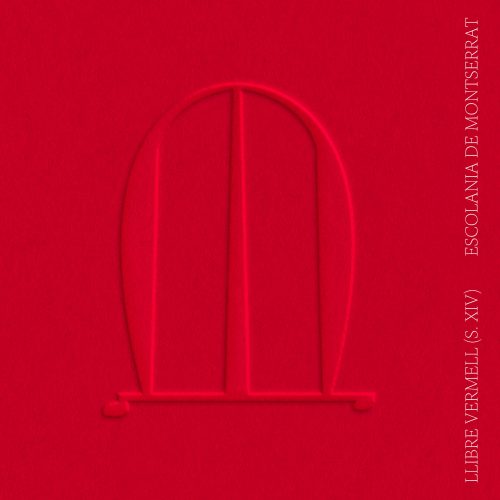
LLIBRE VERMELL DE MONTSERRAT (S.XIV)
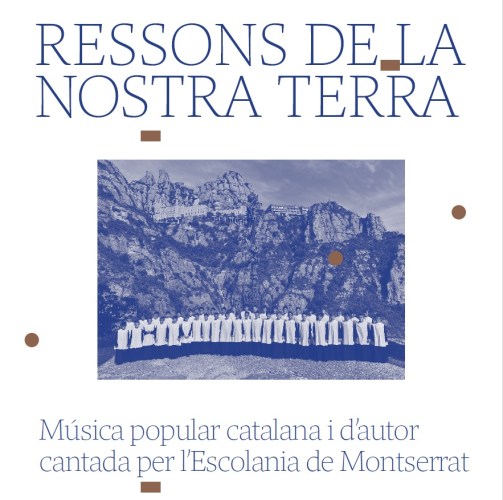
Ressons de la nostra terra
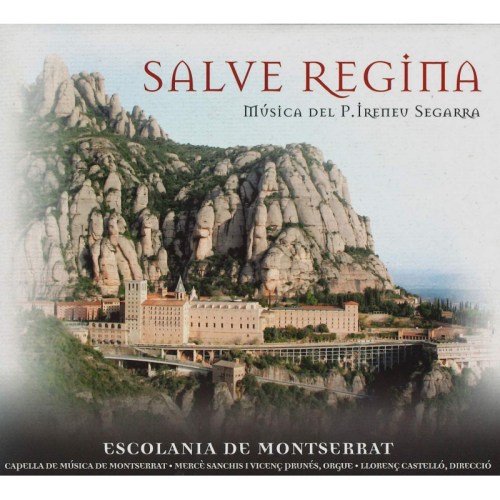
Salve Regina. P. Ireneu Segarra
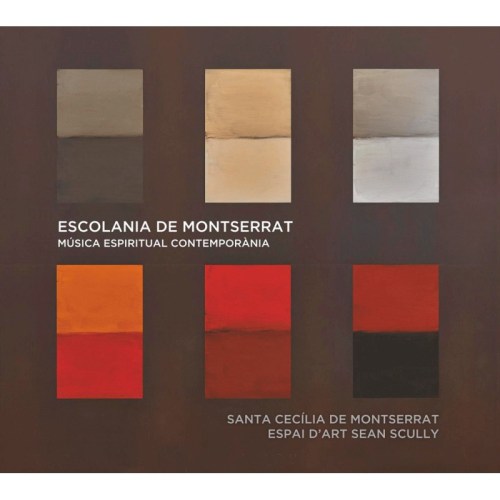
Música espiritual contemporània
The Capella de Música
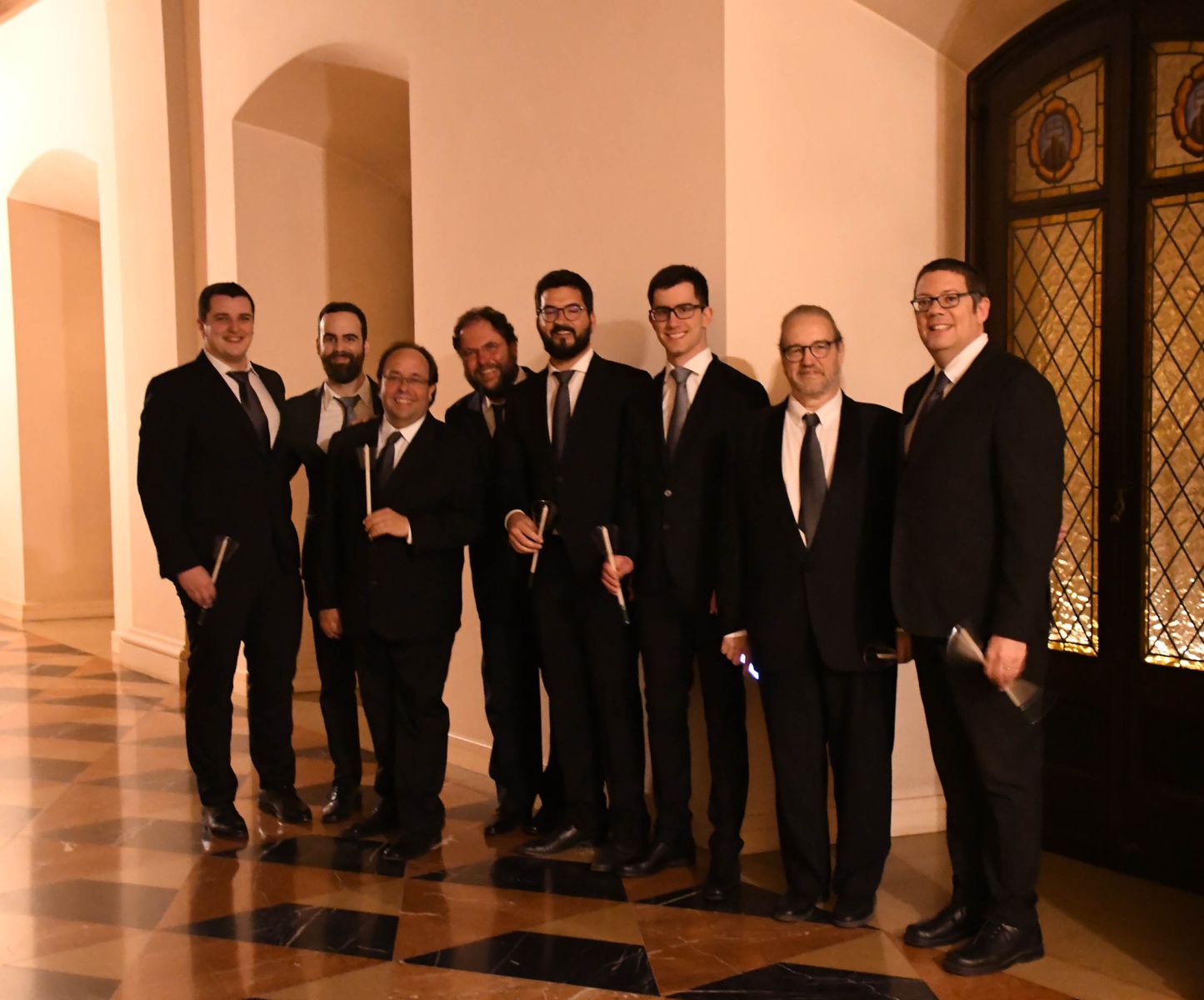
The Escolania collaborates with the Capella de Música de Montserrat, a men’s choir founded in 1997 and made up in large part by former Escolania choirboys. They accompany the Escolania when the repertoire calls for lower registers, in liturgical celebrations as well as concerts. In addition to singing with the Escolania, the Capella de Música occasionally performs solo with its own repertoire of sacred music.
The current director of the choir is Pau Jorquera.
The Schola Cantorum of the Escolania de Montserrat
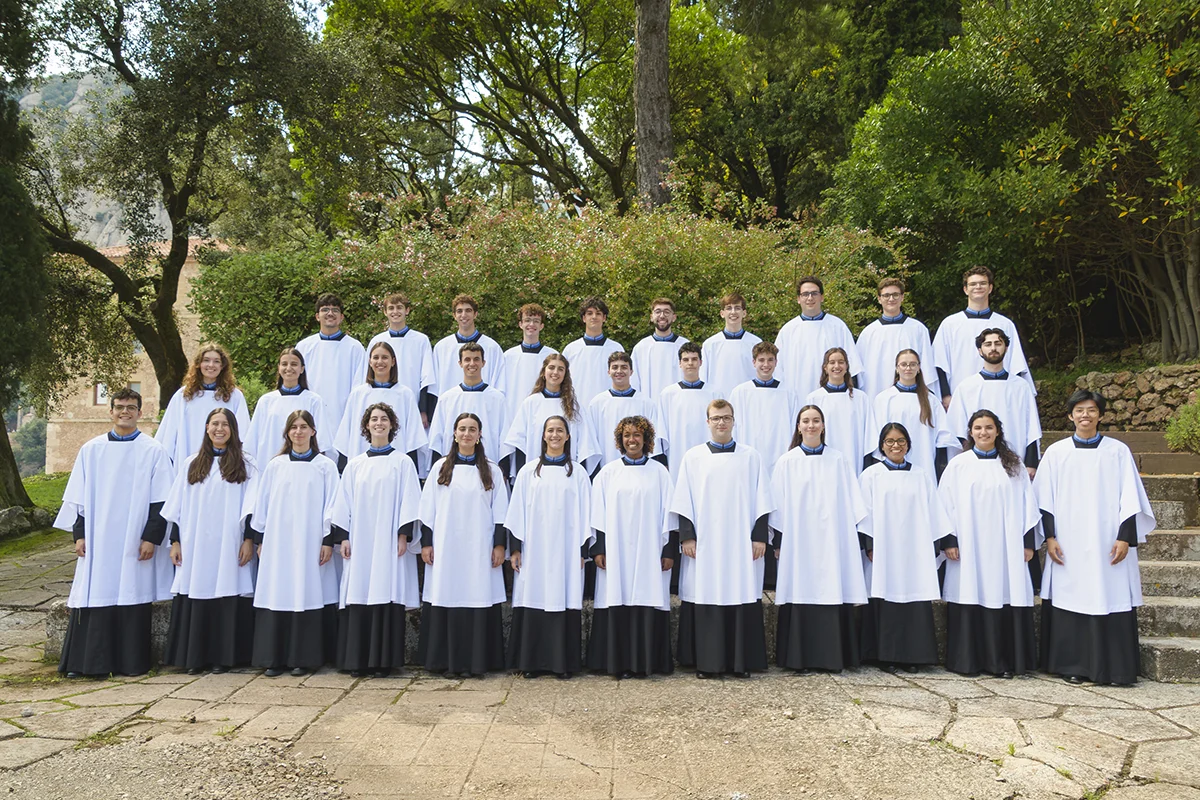
Since the 2023-24 school year, the Escolania has had a new choir called the Schola Cantorum of the Escolania de Montserrat. It is made up of young men and women from the age of 18 who are pursuing music studies alongside their high school or university education. It is conducted by Pau Jorquera. Its members, who are still in their training stage, are also considered "escolans" and "escolanes" (choir members); they wear the traditional skirt and roquet, and are entered into the official vestments book of the Escolania.
Multimedia gallery


